
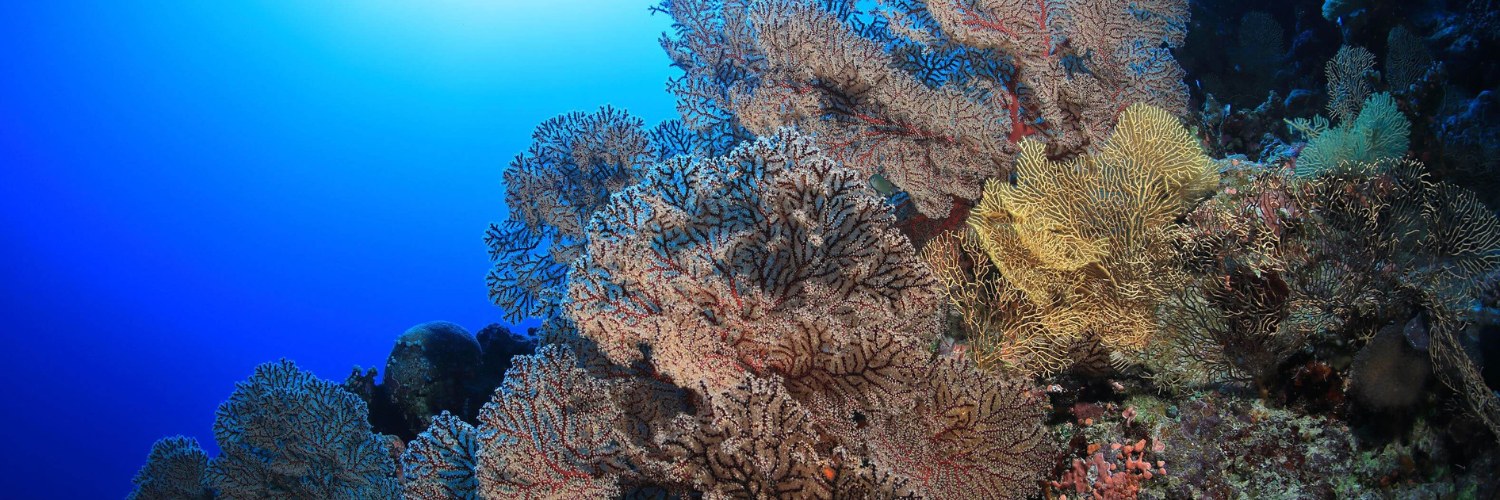
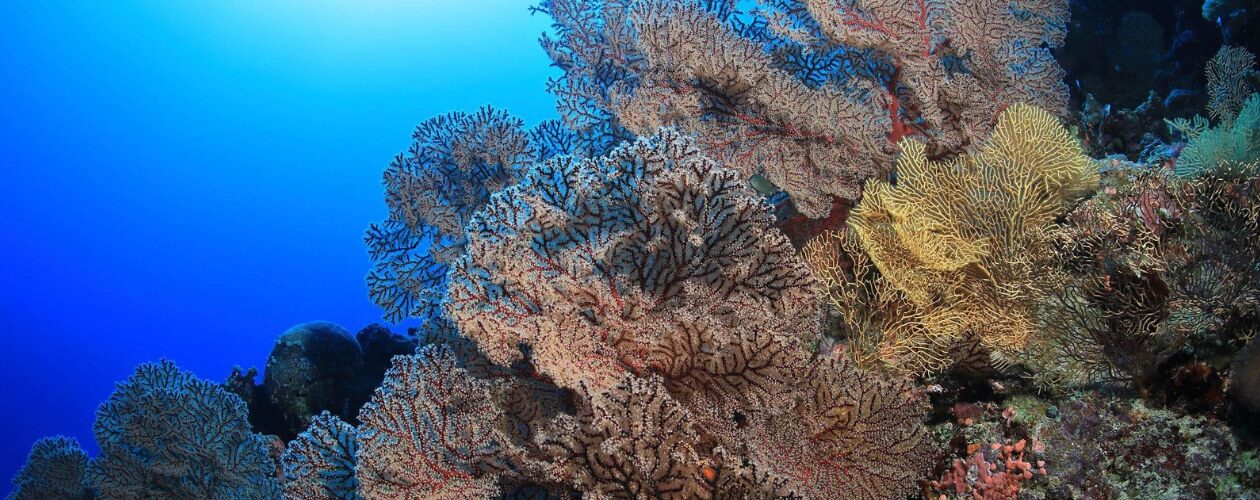
Far beyond the Queensland coast, surrounded by the deep blue waters of the Coral Sea, Osprey Reef is one of Australia’s great remote scuba diving destinations.
Unlike the reefs visited on a typical day trip from Cairns, Osprey Reef lies well offshore and is reached on multi-day liveaboard expeditions. Its isolation, dramatic underwater topography, clear oceanic water and encounters with large marine life have made it particularly sought after by experienced divers.
Here, the reef edge can descend into deep blue water, with steep walls, coral-covered ledges and spectacular drop-offs creating a completely different diving environment from the shallower coral gardens commonly associated with the Great Barrier Reef.
For divers travelling from Cairns, Osprey Reef represents the opportunity to go beyond the Great Barrier Reef itself and experience the remote Coral Sea.
Where Is Osprey Reef?
Osprey Reef lies in the Coral Sea, approximately 220 kilometres off the Queensland coast.
This distinction is important.
Although Osprey Reef is frequently included in liveaboard expeditions departing from Cairns and is often combined with Great Barrier Reef destinations such as the Ribbon Reefs and Cod Hole, Osprey Reef is not part of the Great Barrier Reef.
It is an isolated reef system rising from the deep waters of the Coral Sea.
Its offshore location means there are no conventional day trips to Osprey Reef from Cairns. Visiting requires a suitable multi-day liveaboard expedition and favourable weather and sea conditions.
What Makes Osprey Reef Special?
Isolation is one of the defining characteristics of Osprey Reef.
Instead of lying among the thousands of reefs forming the Great Barrier Reef closer to the continental shelf, Osprey rises from a much deeper oceanic environment.
Underwater, this produces dramatic scenery.
Divers can encounter:
-
- Steep reef walls
- Deep drop-offs
- Coral-covered ledges
- Large soft corals
- Hard coral formations
- Caves and overhangs
- Clear blue oceanic water
- Large schools of fish
- Reef sharks and other pelagic marine life
The combination of reef habitat and surrounding deep water gives Osprey Reef a distinctly oceanic character.
Scuba Diving Osprey Reef
Osprey Reef is primarily a scuba diving destination.
The attraction is not simply coral or tropical fish. It is the combination of healthy reef habitat, dramatic depth, excellent visibility and the possibility of encountering larger marine animals.
Some dives follow walls that disappear into deep blue water. Others explore coral formations, ledges and reef structures where smaller marine species can be found.
Currents can also bring nutrients and marine life past the reef.
Because Osprey Reef is a remote Coral Sea destination, conditions can be more demanding than those encountered at sheltered reef sites closer to Cairns.
For this reason, Osprey Reef liveaboard expeditions are generally best suited to certified divers who are comfortable diving in open-ocean conditions.
North Horn
At the northern end of Osprey Reef is North Horn, one of its best-known dive sites.
North Horn is famous for its dramatic underwater setting and shark encounters.
The reef forms a natural amphitheatre where divers may encounter grey reef sharks, along with other shark species and large pelagic fish moving through the surrounding Coral Sea.
North Horn has become one of the signature experiences associated with Osprey Reef liveaboard diving.
The sharks are wild animals in a natural marine environment, so species, numbers and individual encounters vary.
North Horn deserves to be understood as a dive site within Osprey Reef rather than as a separate reef.
Shark Diving at Osprey Reef
For many experienced divers, sharks are one of the major attractions of Osprey Reef.
Grey reef sharks are among the species regularly associated with the reef, while other sharks may also be encountered.
These animals are an important part of healthy marine ecosystems.
Seeing sharks in the open ocean is very different from viewing them in an aquarium or controlled environment. Divers are entering their habitat, and every encounter depends on natural conditions and animal behaviour.
North Horn is particularly renowned for shark encounters and has long been associated with specialised shark dives on Coral Sea liveaboard expeditions.
Wildlife encounters can never be guaranteed.
Coral and Marine Life
Although sharks receive considerable attention, Osprey Reef is about much more than large predators.
Its reef walls and coral habitats support a diverse marine community.
Divers may encounter tropical reef fish, trevally, barracuda, fusiliers, butterflyfish, angelfish and other schooling species.
Look more closely around the reef and smaller creatures can also appear among the corals, ledges and crevices.
Depending on the dive site and conditions, marine life may include:
-
- Grey reef sharks
- Whitetip reef sharks
- Trevally
- Barracuda
- Turtles
- Moray eels
- Giant clams
- Anemonefish
- Butterflyfish
- Angelfish
- Fusiliers
- Nudibranchs
- Hard corals
- Soft corals
- Gorgonian sea fans
The diversity is part of what makes several days of diving at remote reefs so rewarding. No two dives are necessarily the same.
Visibility at Osprey Reef
Osprey Reef is renowned for its clear Coral Sea water.
Its remote oceanic location can produce exceptional underwater visibility, allowing divers to appreciate the scale of reef walls and watch marine life moving through the blue at considerable distance.
Visibility naturally changes with weather, currents and other environmental conditions, so a particular distance should never be guaranteed.
When conditions align, however, the combination of clear water, deep drop-offs and large marine life can be spectacular.
Osprey Reef vs the Ribbon Reefs
Osprey Reef and the Ribbon Reefs are often combined on longer liveaboard expeditions from Cairns, but they are geographically and environmentally different.
The Ribbon Reefs form part of the Great Barrier Reef and extend along the outer edge of the continental shelf north towards Lizard Island.
They are renowned for coral gardens, bommies, diverse reef diving, the famous Cod Hole and seasonal dwarf minke whale encounters.
Osprey Reef lies farther offshore in the Coral Sea.
Its diving has a more oceanic character, with dramatic walls, deep drop-offs, clear blue water and significant shark encounters.
For divers with enough time, experiencing both destinations on one expedition demonstrates just how varied tropical diving in Far North Queensland can be.
Osprey Reef vs Cod Hole
Cod Hole and Osprey Reef are also sometimes mentioned together because longer liveaboard itineraries can visit both.
Cod Hole is a specific dive site at Ribbon Reef No. 10 on the Great Barrier Reef and is famous for its giant potato cod.
Osprey Reef is an entire remote reef system in the Coral Sea, with numerous dive sites and a particular reputation for walls, oceanic visibility and sharks.
They are very different experiences and complement each other well on a longer diving expedition.
Is Osprey Reef Suitable for Beginner Divers?
Osprey Reef should not automatically be treated as a beginner diving destination.
Its remote location, open-ocean setting, potential currents and deep-water dive sites mean that previous diving experience can be important.
Individual liveaboard operators may have minimum certification, recent diving or experience requirements for Coral Sea expeditions.
Divers should check the requirements for their particular trip before booking and assess their experience realistically.
Someone newly certified or returning to diving after a long break may benefit from completing additional dives closer to Cairns before undertaking a remote Coral Sea expedition.
Can You Snorkel at Osprey Reef?
Osprey Reef is overwhelmingly associated with scuba diving rather than conventional reef snorkelling.
Some liveaboard expeditions may permit snorkelling at suitable locations and under suitable conditions, but Osprey Reef should not be chosen primarily as an easy snorkelling destination.
Travellers looking for relaxed snorkelling, shallow coral gardens or activities for non-swimmers will generally find a Great Barrier Reef day tour from Cairns more suitable.
Osprey Reef is about remote Coral Sea exploration and is particularly rewarding for experienced scuba divers.
Liveaboard Diving at Osprey Reef
A liveaboard is the practical way to experience Osprey Reef from Cairns.
The distance involved makes a multi-day expedition necessary.
Living aboard the vessel allows divers to travel far beyond the range of normal Cairns day boats and complete multiple dives across remote reef locations.
A Coral Sea liveaboard can offer:
-
- Multiple dives over several days
- Remote reef locations
- Wall and drop-off diving
- Shark encounters
- Excellent underwater visibility
- Early morning dives
- Night diving where conditions and itineraries permit
- More time immersed in the marine environment
- Opportunities to combine Osprey Reef with northern Great Barrier Reef destinations
For experienced divers, the journey offshore is part of the experience.
Experience Osprey Reef from Cairns
Spirit of Freedom operates multi-day liveaboard expeditions from Cairns that travel to Osprey Reef in the Coral Sea.
Its Coral Sea itineraries are designed for divers wanting to venture well beyond the reef locations reached on conventional Cairns day trips.
The Spirit of Freedom 4 Night Liveaboard combines remote Coral Sea diving at Osprey Reef with additional northern reef diving as the vessel travels back towards Cairns.
For travellers wanting the extended expedition, the Spirit of Freedom 7 Day Liveaboard combines Osprey Reef with the Ribbon Reefs and the famous Cod Hole, bringing together two very different marine environments in one journey.
Osprey Reef itineraries and individual dive sites remain subject to weather, sea conditions, diver experience, safety and operational requirements.
Protecting Osprey Reef
Remote does not mean invulnerable.
Osprey Reef is a natural marine ecosystem, and divers have a responsibility to minimise their impact.
Good buoyancy control is particularly important around coral walls and delicate reef structures.
Divers should avoid touching or holding coral, keep fins and equipment clear of the reef and never collect marine life or coral.
Wildlife should be given space.
Sharks, turtles and other marine animals should never be chased or touched for a photograph.
Cameras, gauges and alternate air sources should also be secured so they cannot drag across the reef.
The best dive leaves nothing behind and changes nothing.
Osprey Reef FAQs
Where is Osprey Reef?
Osprey Reef lies approximately 220 kilometres offshore in the Coral Sea, east of Far North Queensland.
Is Osprey Reef part of the Great Barrier Reef?
No. Osprey Reef is located in the Coral Sea and is separate from the Great Barrier Reef. It is commonly combined with Great Barrier Reef destinations on longer liveaboard expeditions departing from Cairns.
How do you get to Osprey Reef?
Osprey Reef is reached by multi-day liveaboard from Cairns. Its remote location places it beyond the practical range of conventional Great Barrier Reef day tours.
What is Osprey Reef famous for?
Osprey Reef is renowned for remote Coral Sea diving, steep reef walls, deep drop-offs, clear oceanic water, coral formations and encounters with sharks and other large marine life.
What is North Horn?
North Horn is a famous dive site at the northern end of Osprey Reef, particularly known for shark encounters and its natural underwater amphitheatre.
Can you see sharks at Osprey Reef?
Yes, Osprey Reef is well known for shark encounters, particularly grey reef sharks. Sharks are wild animals, however, so sightings, species and numbers cannot be guaranteed.
Can beginners dive Osprey Reef?
Osprey Reef is generally better suited to experienced certified divers because of its remote location and open-ocean diving conditions. Divers should check the certification and experience requirements of their chosen liveaboard.
Can you snorkel Osprey Reef?
Snorkelling may be possible on some itineraries and at suitable locations, but Osprey Reef is primarily a scuba diving destination. Travellers seeking easy reef snorkelling are generally better suited to a Great Barrier Reef day trip.
What is the difference between Osprey Reef and the Ribbon Reefs?
The Ribbon Reefs are part of the northern Great Barrier Reef. Osprey Reef lies farther offshore in the Coral Sea. The Ribbon Reefs are known for diverse reef sites and Cod Hole, while Osprey Reef is particularly renowned for walls, deep water, oceanic visibility and shark diving.
Which liveaboards visit Osprey Reef from Cairns?
Spirit of Freedom operates selected multi-day Coral Sea liveaboard expeditions from Cairns that include Osprey Reef. Longer itineraries can combine Osprey Reef with the Ribbon Reefs and Cod Hole.
Discover Osprey Reef
Osprey Reef is a destination for divers who want to go farther.
Farther from Cairns.
Farther offshore.
And beyond the Great Barrier Reef into the deep blue waters of the Coral Sea.
Its attraction comes from the combination of isolation and scale: coral-covered walls dropping towards the depths, clear oceanic water, schools of fish moving along the reef edge and sharks appearing from the blue.
Then there is North Horn, where the opportunity to encounter sharks in their natural environment has become one of the defining experiences of Coral Sea diving.
Osprey Reef is not the easiest reef to reach, and that is precisely part of what makes it special.
For experienced divers looking for a remote liveaboard adventure from Cairns, Osprey Reef is one of the Coral Sea’s extraordinary diving destinations.