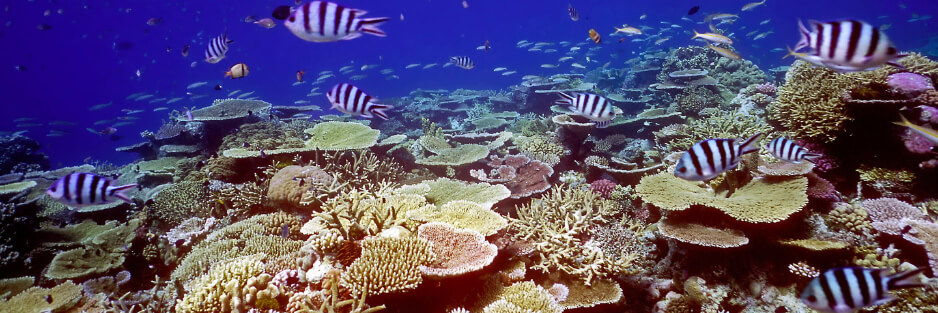
Stretching along the northern Great Barrier Reef, the Ribbon Reefs are a remarkable chain of long, narrow coral reefs renowned for spectacular scuba diving, abundant marine life and some of Australia’s most celebrated dive sites.
Far beyond the reef locations normally visited on a day trip from Cairns, the Ribbon Reefs reward travellers who have the time to venture north by liveaboard. Here, divers can explore coral gardens, bommies, walls, channels and passages inhabited by everything from tiny reef creatures to turtles, reef sharks, schooling fish and giant potato cod.
The northern Ribbon Reefs are also home to the legendary Cod Hole, one of the Great Barrier Reef’s best-known dive sites.
Where Are the Ribbon Reefs?
The Ribbon Reefs lie along the outer edge of the Great Barrier Reef, north of Cairns and extending towards the waters around Lizard Island.
Rather than being one individual reef, the Ribbon Reefs form a series of elongated reef systems, traditionally identified by numbers as well as named dive sites.
Their position close to the edge of the continental shelf helps create the distinctive environment of the region.
Their distance from Cairns also means that exploring the Ribbon Reefs generally requires a multi-day liveaboard expedition, rather than a conventional Great Barrier Reef day tour.
What Makes the Ribbon Reefs Special?
The attraction of the Ribbon Reefs is not one single dive site. It is the extraordinary variety encountered while travelling through the reef system.
Different locations can reveal shallow coral gardens, towering bommies, reef walls, sandy passages, channels and deeper drop-offs.
Marine life varies from site to site and can include colourful tropical reef fish, giant clams, anemonefish, trevally, turtles, moray eels, nudibranchs, reef sharks and large schools of pelagic fish.
A liveaboard works particularly well here because, rather than experiencing a single reef location, divers can progressively explore different parts of this vast northern reef system over several days.
Scuba Diving the Ribbon Reefs
The Ribbon Reefs are particularly famous as a scuba diving destination.
Their varied underwater terrain creates diving suitable for different experiences and conditions, from coral gardens and bommies to walls, channels and drift dives.
Some locations are known for dense concentrations of reef fish and coral, while others offer opportunities to encounter larger marine animals moving along the outer reef.
The remoteness of the Ribbon Reefs also changes the nature of the experience. A liveaboard allows divers to remain in the region for several days, completing multiple dives and potentially seeing the same reef environment under different tides, light and conditions.
Night diving may also reveal an entirely different community of marine life after sunset.
Cod Hole
At Ribbon Reef No. 10 lies the famous Cod Hole.
Cod Hole is particularly celebrated for encounters with giant potato cod. These impressive reef fish can grow to around two metres long and weigh approximately 100 kilograms.
The site is also known for sharks, trevally, moray eels, nudibranchs and large schools of reef fish.
Cod Hole is one of the signature diving experiences of the northern Great Barrier Reef and one of the major reasons divers travel to the Ribbon Reefs.
Famous Ribbon Reef Dive Sites
Cod Hole may have the greatest name recognition, but it is only one part of the Ribbon Reefs.
Depending on itinerary and conditions, liveaboard diving can include locations such as:
-
- Challenger Bay
- Lighthouse Bommie
- Pixie Pinnacle
- Wonder Wall
- Two Towers
- Snake Pit
- Dynamite Pass
- Steve’s Bommie
- Temple of Doom
- Flare Point
Each location has its own underwater character, which is precisely why the Ribbon Reefs are better experienced as a journey rather than as a single dive.
Marine Life of the Ribbon Reefs
The Ribbon Reefs support an exceptionally diverse collection of Great Barrier Reef marine life.
Divers may encounter:
-
- Butterflyfish
- Angelfish
- Parrotfish
- Sweetlips
- Anemonefish
- Fusiliers
- Giant clams
- Sea turtles
- Reef sharks
- Trevally
- Moray eels
- Potato cod
- Nudibranchs
- Sea snakes
- Hard and soft corals
- Large schools of pelagic fish
Nothing in a wild reef environment is guaranteed, and that unpredictability is part of the experience.
Every dive has the potential to reveal something different.
Dwarf Minke Whales and the Ribbon Reefs
One of the most extraordinary seasonal experiences on the northern Great Barrier Reef is the appearance of dwarf minke whales.
These inquisitive whales visit northern Great Barrier Reef waters during the Australian winter, with the Ribbon Reefs particularly associated with encounters during June and July.
Whales are wild animals, so encounters can never be guaranteed.
Their seasonal presence, however, adds another dimension to diving the northern Great Barrier Reef.
Snorkelling at the Ribbon Reefs
Although the Ribbon Reefs are best known internationally for scuba diving, some liveaboard itineraries can also accommodate snorkellers where conditions and individual sites are suitable.
The important distinction is that this is not the same type of snorkelling experience as a Cairns day tour.
The Ribbon Reefs are remote offshore environments, and conditions can vary considerably between locations.
Anyone considering a Ribbon Reef liveaboard primarily for snorkelling should check the individual trip requirements and suitability before booking.
For travellers whose main priority is easy, guided or beginner snorkelling, one of the many Great Barrier Reef day tours from Cairns may be more appropriate.
Ribbon Reefs vs Cairns Outer Reef Day Trips
Both offer genuine Great Barrier Reef experiences, but they serve different travellers.
A Cairns Outer Reef day tour is generally the easier option for first-time visitors, families, snorkellers and travellers with limited time. You leave Cairns in the morning, spend the day experiencing the reef and return in the afternoon.
The Ribbon Reefs require considerably more time and travel.
Their strength lies in remoteness, multiple dive sites and the opportunity to spend several days immersed in the northern Great Barrier Reef.
For a keen scuba diver, that additional time is part of the appeal.
Ribbon Reefs or Osprey Reef?
The Ribbon Reefs and Osprey Reef are often visited on the same longer liveaboard itineraries, but they are not the same destination.
The Ribbon Reefs are part of the Great Barrier Reef, extending north along the continental shelf.
Osprey Reef lies much farther offshore in the Coral Sea.
The Ribbon Reefs are known for coral gardens, bommies, famous sites such as Cod Hole and a strong seasonal association with dwarf minke whales.
Osprey Reef offers a very different remote Coral Sea diving environment, including steep walls, deep blue water and major shark encounters.
Both are exceptional, but they offer different experiences.
Is Ribbon Reef Diving Suitable for Beginners?
This depends on the itinerary, site and diver’s experience.
Some Ribbon Reef dives may be suitable for less-experienced certified divers, while others are better suited to divers with stronger buoyancy, current and open-water experience.
Remote liveaboard diving is different from a sheltered introductory dive close to Cairns.
Divers should check the experience requirements of the individual liveaboard before booking.
Liveaboard Diving on the Ribbon Reefs
A liveaboard is the most practical and immersive way to experience the Ribbon Reefs.
Instead of returning to Cairns at the end of each day, you remain aboard the vessel and continue travelling through the reef system.
That can mean:
-
- Multiple dives each day
- Access to remote reef sites
- Night diving
- Early morning diving
- More time underwater
- Different sites across several Ribbon Reefs
- Less time travelling back and forth to the mainland
For experienced divers, this can turn a Great Barrier Reef trip into a genuine expedition.
Experience the Ribbon Reefs from Cairns
The Ribbon Reefs are visited by selected Great Barrier Reef liveaboards from Cairns, particularly itineraries designed for divers wanting to explore the remote northern reef systems.
Spirit of Freedom operates multi-day liveaboard expeditions through the Ribbon Reefs, including its 3 Night Cod Hole & Ribbon Reefs trip and longer itineraries that combine the Ribbon Reefs with Cod Hole and the Coral Sea.
These itineraries can travel through several Ribbon Reefs and visit multiple dive sites, with the exact locations selected according to weather, sea conditions and operational requirements.
The Spirit of Freedom 7 Day Liveaboard combines the Ribbon Reefs and Cod Hole with remote Coral Sea diving, including Osprey Reef.
Because liveaboard itineraries cover multiple remote reef locations, individual dive sites are always subject to conditions.
Explore our Great Barrier Reef liveaboards from Cairns to compare trips visiting the Ribbon Reefs, Cod Hole and other remote northern reef destinations.
Protecting the Ribbon Reefs
The Ribbon Reefs are part of a living Great Barrier Reef ecosystem.
Their remoteness does not make them immune from environmental pressure.
Visitors can help protect the reef through careful diving and responsible behaviour.
When diving or snorkelling:
-
- Never stand on coral.
- Avoid touching coral.
- Maintain good buoyancy.
- Keep fins and equipment clear of the reef.
- Never collect coral, shells or marine animals.
- Do not chase turtles, sharks or other wildlife.
- Secure cameras and loose equipment.
- Keep rubbish out of the ocean.
- Follow crew and Marine Park instructions.
- Leave the reef exactly as you found it.
Remote reef diving is a privilege.
The goal should always be to experience the Ribbon Reefs without changing them.
Ribbon Reefs FAQs
Where are the Ribbon Reefs?
The Ribbon Reefs are a chain of long, narrow coral reefs along the northern Great Barrier Reef, extending north from the Cairns region towards Lizard Island.
Are the Ribbon Reefs part of the Great Barrier Reef?
Yes. The Ribbon Reefs are part of the Great Barrier Reef system.
Can you visit the Ribbon Reefs from Cairns?
Yes. Because of their distance from Cairns, they are primarily reached on multi-day liveaboard expeditions rather than standard reef day trips.
What is Cod Hole?
Cod Hole is a famous dive site at Ribbon Reef No. 10, best known for encounters with giant potato cod and abundant reef marine life.
Can you scuba dive the Ribbon Reefs?
Yes. Scuba diving is the main reason most travellers visit the Ribbon Reefs, with numerous dive sites spread through the reef system.
Can you snorkel the Ribbon Reefs?
Some liveaboard itineraries may accommodate snorkellers, but suitability depends on the individual reef site, conditions and operator.
What marine life can you see at the Ribbon Reefs?
Divers may encounter giant potato cod, reef sharks, turtles, trevally, moray eels, tropical reef fish, giant clams, nudibranchs and many other reef species.
Can you see dwarf minke whales at the Ribbon Reefs?
Dwarf minke whales visit the northern Great Barrier Reef seasonally, particularly around June and July. Wildlife encounters cannot be guaranteed.
Is the Ribbon Reefs experience suitable for first-time divers?
That depends on the liveaboard and individual dive sites. Some remote dives are better suited to divers with previous ocean and current experience.
What is the difference between the Ribbon Reefs and Osprey Reef?
The Ribbon Reefs form part of the Great Barrier Reef. Osprey Reef lies farther offshore in the Coral Sea and offers a distinctly different deep-ocean diving environment.
Which tours visit the Ribbon Reefs?
Selected multi-day Cairns liveaboards visit the Ribbon Reefs. Spirit of Freedom operates itineraries that include the Ribbon Reefs, Cod Hole and, on longer trips, Osprey Reef.
Discover the Ribbon Reefs
The Ribbon Reefs reveal a very different side of the Great Barrier Reef from the locations reached on a typical Cairns day trip.
This is a place for taking your time.
Travelling north.
Waking up surrounded by reef.
Diving several different sites.
Watching one coral system give way to another.
A giant potato cod may appear at Cod Hole.
A reef shark may pass along a wall.
A turtle may move across a coral garden.
Tiny nudibranchs may be hiding only centimetres away.
And during winter, a dwarf minke whale may appear in the blue.
The Ribbon Reefs are not one dive site.
They are a journey through one of the most remarkable sections of the northern Great Barrier Reef.
For divers wanting to go beyond a single day on the reef, the Ribbon Reefs are one of the great liveaboard experiences from Cairns.